
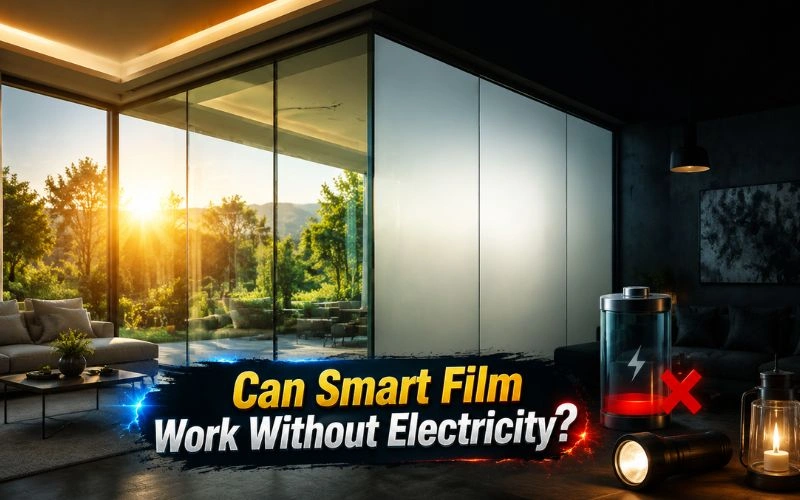
Smart film technology has changed the way homes and businesses manage privacy, light control, and interior design. If you have recently come across this innovative product, one of the first questions that comes to mind is straightforward but important: can smart film actually work without electricity?
It is a fair concern, especially in a country like Pakistan where power outages are a regular part of life. Before investing in smart film for your windows, doors, or glass partitions, you need to understand exactly how it behaves when the power goes off, and whether it still serves its purpose.
How Smart Film Actually Works
Smart film is built on PDLC technology, which stands for Polymer Dispersed Liquid Crystal. In simple terms, the film contains microscopic liquid crystals suspended between two layers of film. These crystals respond to an electrical signal to shift their alignment.
What Happens When Power Is Applied
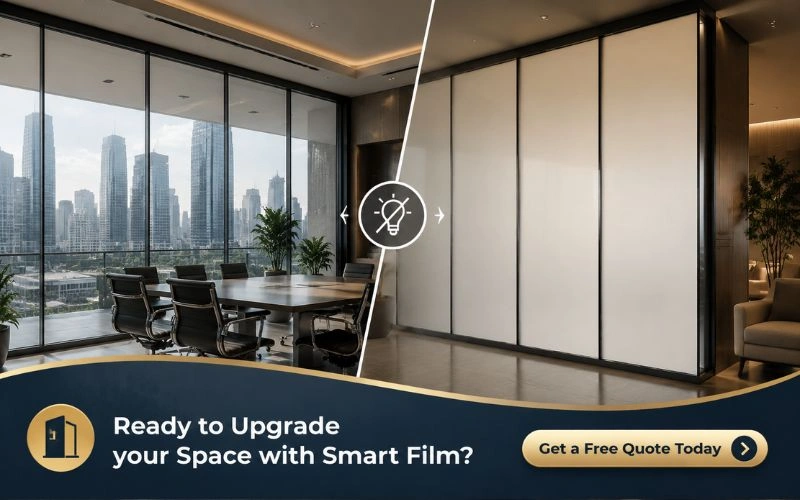
When electricity flows through the smart film, the liquid crystals align in a uniform direction, allowing light to pass through. This is what makes the glass appear clear and transparent. The moment you cut the power, those crystals scatter back to a random arrangement, and the film returns to its default frosted or opaque state.
This is the core behavior of switchable glass film and it is essential to understand before installation. The film does not stay in whichever state it was last set to. It always defaults back to opaque when electricity is removed.
Does Smart Film Provide Privacy Without Power?
Here is the reassuring part for anyone worried about power cuts: smart film provides privacy automatically when there is no electricity. Since the default state of the film is frosted or milky white, your glass remains private the moment the power goes out.
The Default State Is Your Friend
This means that during a load shedding hour or an unexpected power outage, your bedroom, bathroom, or meeting room glass does not suddenly become transparent. The frosted default state acts as a passive privacy layer at all times when electricity is absent.
This behavior also makes electric window tint a smarter long-term choice compared to manual blinds or curtains, which can be left open by mistake. Smart film ensures you always have a baseline level of privacy without needing to do anything at all.
According to Glass Magazine, PDLC smart film products are specifically engineered so that the opaque state is the natural resting position of the liquid crystals, reinforcing privacy as the default condition rather than an activated feature.
Is Smart Film Safe to Use During Power Outages?
Safety is another major consideration. Smart film operates on very low voltage, typically between 48 to 65 volts AC. This is significantly lower than standard household current, which means the risk during installation or in case of any electrical fault is minimal. There is no danger of the glass becoming a safety hazard during a power outage.
Low Voltage, High Reliability
Many users also wonder whether the film itself deteriorates when power is frequently interrupted. The answer is no. Smart film is designed to handle repeated switching cycles, often rated for tens of thousands of cycles over its lifespan. Power outages and restoration do not accelerate wear on the film itself.
If you are curious about the long-term performance of this product, you can check out detailed insights on how long does smart film last to get a clearer picture of its durability under real-world conditions.
Can You Control Smart Film Without Electricity?
Smart film cannot switch to its clear state without an electrical supply. That is the one honest limitation of the technology. You cannot manually override the film to make it transparent without power. However, some advanced smart film systems can be paired with small UPS backup units or battery packs, which keep the film powered during short outages.
Backup Power as a Practical Solution
For offices and commercial spaces where maintaining a clear glass state during presentations or meetings is critical, a small dedicated UPS for the smart film circuit is a practical and cost-effective fix. This is especially relevant in Pakistan where power interruptions can happen at inconvenient times.
It is also worth reading about the common myths about electric window tinting to separate fact from fiction before making a purchase decision, since many people assume the technology is far more fragile or complicated than it actually is.
According to ScienceDirect research on PDLC materials, PDLC films have been engineered over decades for commercial reliability, making them one of the most stable switchable glazing technologies available today.
Does Smart Film Use a Lot of Electricity?
This is a closely related concern and one worth addressing directly. Smart film consumes very little energy during operation. A typical square meter of smart film uses roughly 3 to 5 watts, which is comparable to a small LED bulb. Even in a large office with floor-to-ceiling smart glass panels, the energy draw remains modest.
Impact on Your Electricity Bill
In fact, smart film can actually lower your overall energy consumption by reducing heat gain through glass, which eases the load on your air conditioning. This has a measurable positive effect on your monthly bills, especially during Pakistan’s intense summers.
For a deeper breakdown of the numbers, the article on smart film reduces home electricity bill covers how the energy savings stack up over time compared to the minimal running cost of the film itself.
Smart Film vs Traditional Window Treatments Without Power
If you compare smart film to blinds, curtains, or frosted glass during a power outage, smart film actually holds a clear advantage. Traditional blinds and curtains still require a person to manually close them. Frosted glass offers permanent opacity with no flexibility.
Smart film, on the other hand, gives you permanent frosted privacy during a power cut and full transparency the moment power returns, all without touching anything. When you compare smart glass vs smart film and consider real-world power conditions in Pakistan, smart film stands out as the more adaptable and affordable option for most residential and commercial applications.
Final Thoughts
So, can smart film work without electricity? The answer is yes, but only in its default opaque state. It will not switch to clear without power, but it will reliably keep your space private even during the longest load shedding. For spaces where both privacy and transparency are equally important, a small backup power solution keeps the film fully functional at all times.
Smart film remains one of the most practical and energy-efficient privacy solutions available in Pakistan today. Whether you are outfitting a home, an office, or a commercial facility, understanding how it behaves under all conditions helps you plan smarter.
Want to see how smart film can work for your specific space? Contact Smart Film Solutions today for a free consultation.