
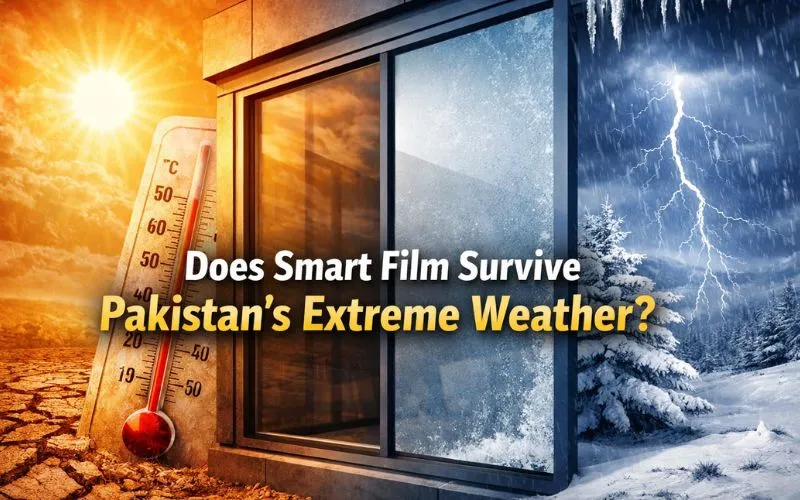
Pakistan experiences some of the most challenging weather conditions in South Asia, from scorching summers exceeding 50°C in certain regions to heavy monsoon downpours and dusty winds. If you’re considering smart film installation for your home or office, understanding how this technology performs under local weather conditions is essential. As architectural glass trends in Pakistan for 2026 continue to evolve, smart film has become one of the most discussed solutions for climate-resilient buildings.
Smart film technology has advanced significantly, and modern PDLC (Polymer Dispersed Liquid Crystal) films are engineered to withstand extreme environmental factors. However, their longevity depends heavily on proper installation, quality standards, and regular maintenance.
Want smart film that’s built to last through Pakistan’s toughest seasons? Get a free consultation today.
What Affects Smart Film Lifespan in Pakistan?
Temperature fluctuations pose the biggest challenge to smart film durability. According to the Pakistan Meteorological Department, glass surfaces in cities like Karachi, Lahore, and Islamabad can heat up to 70°C during peak summer months. Quality smart films are designed with thermal resistance up to 80°C, making them suitable for Pakistan’s climate when sourced from reliable manufacturers. If you’re still weighing your options, understanding the difference between smart glass vs smart film can help you choose the right solution for your specific environment.
The key factors that determine how well your smart film holds up include:
Environmental Factors:
- Direct UV exposure intensity (Pakistan receives high UV radiation year-round)
- Humidity levels during monsoon season (60-80% in coastal areas)
- Temperature variations between day and night
- Dust and sand particle accumulation
- Rain intensity and frequency
Technical Specifications:
- Film thickness and layer composition
- Quality of adhesive compounds used
- Electrical component protection standards
- Edge sealing effectiveness
- Manufacturer warranty coverage
Modern office privacy solutions incorporate weather-resistant smart films that maintain functionality even in Pakistan’s toughest conditions.
Expected Lifespan and Maintenance Requirements
High-quality smart film installations typically last 10-15 years in Pakistan when maintained properly. This lifespan matches or exceeds traditional window treatments like blinds or curtains, which often deteriorate faster in humid and dusty environments.
Regular Maintenance Tips
Your smart film needs minimal attention, but these practices extend its operational life. For a complete step-by-step guide, refer to our dedicated resource on how to clean smart film the right way without causing surface damage.
Start with gentle cleaning using microfiber cloths and pH-neutral solutions. Harsh chemicals damage the film surface and reduce clarity over time. Monthly cleaning is sufficient for most installations, though dusty areas may require bi-weekly attention.
Check electrical connections annually, especially before monsoon season. Moisture can affect transformer performance and switching mechanisms. Professional inspections ensure all components remain sealed and functional.
According to ASHRAE building performance standards, regular maintenance of window film systems can extend their operational life by 3-5 years beyond standard expectations, making smart film a cost-effective long-term investment.
Installation Quality Makes the Difference
The durability of your smart film system depends significantly on installation expertise. Pakistan’s weather demands precise edge sealing to prevent moisture infiltration and proper electrical component placement away from direct heat sources.
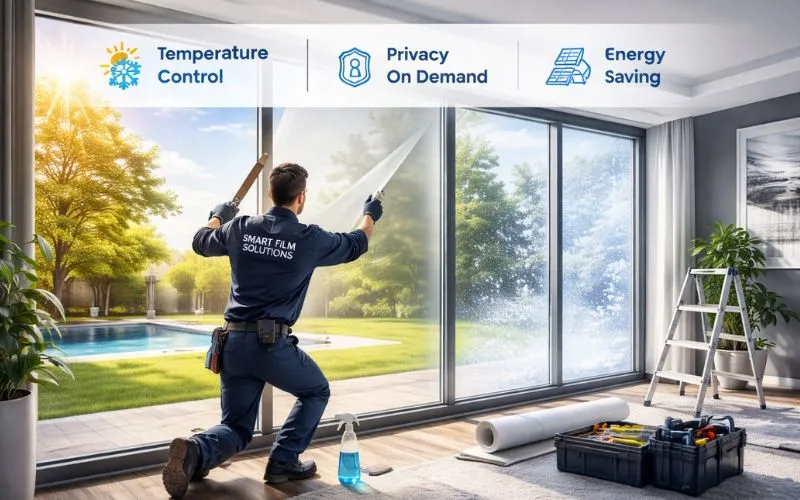
Professional installers account for thermal expansion, ensuring the film doesn’t bubble or peel during summer heat. They also position transformers in ventilated spaces and use weather-resistant conduits for wiring. These details matter tremendously in maintaining system integrity through seasonal changes.
Knowing which rooms in your home need smart film is just as important as the installation itself — south and west-facing windows take the most weather punishment and require the most careful fitting.
Frequently Asked Questions
Can smart film survive Karachi’s humidity during monsoon season?
Yes, quality smart films are designed with moisture-resistant layers and sealed edges that prevent water infiltration. The key is ensuring professional installation with proper sealing techniques. Coastal installations require additional edge protection, which reputable installers include as standard practice. Many myths around weather sensitivity are addressed in our post on myths about electric window tinting debunked.
Does extreme summer heat damage the film’s switching capability?
Modern smart films operate effectively in temperatures up to 80°C, well above Pakistan’s peak glass surface temperatures. However, cheap imports may fail at lower thresholds. Always verify temperature ratings before purchase and choose films certified for hot climates.
How often should I replace smart film in Pakistan?
With proper installation and maintenance, replacement shouldn’t be necessary for 10-15 years. Most failures occur due to poor installation or using substandard products rather than climate damage. Choose established suppliers who offer genuine warranties and after-sales support.
Conclusion
Smart film technology proves remarkably durable in Pakistan’s challenging climate when you invest in quality products and professional installation. The initial cost difference between premium and budget options becomes insignificant when you consider longevity and performance reliability.
Your smart film investment will serve you well through countless summers, monsoons, and dusty seasons if you follow manufacturer guidelines and schedule basic maintenance. Before purchasing, make sure you read our guide on how to choose the right privacy windows for your space to ensure you’re selecting the most weather-appropriate configuration for your specific location and building type.