
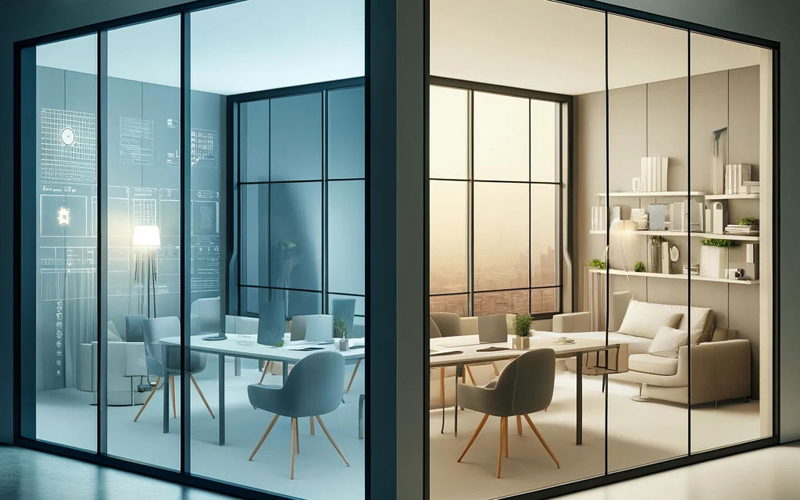
In the rapidly advancing world of technology, the innovations in smart materials have been remarkable. Among these, smart glass and smart film stand out for their ability to revolutionize how we interact with our living and working spaces. Both smart glass and smart film offer unique benefits, but they are distinct in their applications, functionalities, and installation processes. In this blog, we will delve into the differences between smart glass and smart film, helping you decide which technology suits your needs best.
What is Smart Glass?
Smart glass, also known as switchable glass or intelligent glass, is a type of glass that can change its light transmission properties when voltage, light, or heat is applied. The technology behind smart glass typically involves electrochromic, photochromic, thermochromic, or liquid crystal technologies.
Key Features of Smart Glass:
- Privacy Control: With a simple switch, smart glass can change from transparent to opaque, providing privacy without needing curtains or blinds.
- Energy Efficiency: Smart glass can help regulate indoor temperatures by controlling the amount of solar heat entering the building, reducing the need for air conditioning.
- UV Protection: Smart glass blocks harmful UV rays, protecting furniture and interiors from fading.
- Aesthetic Appeal: Smart glass’s sleek and modern appearance adds a contemporary touch to any building design.
Applications of Smart Glass:
Smart glass is commonly used in commercial buildings, residential properties, automotive windows, and healthcare facilities. It is ideal for conference rooms, exterior windows, skylights, and partitions where privacy and energy efficiency are important.
What is Smart Film?
Smart film, also known as switchable or privacy film, is a thin, adhesive layer that can be applied to existing glass surfaces. Like smart glass, smart film can change its light transmission properties when an electrical current is applied.
Key Features of Smart Film:
- Versatility: Smart film can be retrofitted to existing glass, making it a cost-effective solution for upgrading windows and partitions.
- Easy Installation: The installation process for smart film is relatively simple and non-invasive, often requiring just a few hours.
- Privacy on Demand: Like smart glass, smart film can instantly switch from transparent to opaque, offering on-demand privacy.
- Cost-Effective: Smart film is generally more affordable than smart glass, making it an attractive option for budget-conscious projects.
Applications of Smart Film:
Smart film is used in various settings, including residential homes, offices, retail stores, and healthcare facilities. It is particularly popular for retrofitting existing windows, glass doors, shower enclosures, and projection screens.
Key Differences Between Smart Glass and Smart Film
Installation Process:
- Smart Glass: Requires the installation of new glass panels, which can be more invasive and time-consuming.
- Smart Film: This can be applied to existing glass surfaces, making it easier and quicker to install.
Cost:
- Smart Glass: Generally more expensive due to the need for new glass panels and more complex installation.
- Smart Film: More affordable, especially for retrofitting existing structures.
Versatility:
- Smart Glass: Limited to new installations or major renovations.
- Smart Film: This can be used on any existing glass surface, providing greater flexibility.
Durability:
- Smart Glass: Highly durable and integrated into the building’s structure.
- Smart Film: While durable, it may need to be replaced more frequently than smart glass.
Aesthetic and Design:
- Smart Glass: Provides a seamless, high-end look integrated into the building design.
- Smart Film: Offers a similar aesthetic but may not blend as seamlessly as smart glass in some applications.
Choosing the Right Technology
Consider your specific needs and budget when deciding between smart glass and smart film. If you are undertaking a new construction project or a major renovation and are looking for a long-term, high-end solution, smart glass may be the better choice. On the other hand, if you want to retrofit existing windows or need a more budget-friendly option, smart film could be the ideal solution.